
The Seawane Club’s History
The Name
In 1914, during excavation on the Hewlett Harbor estate of attorney John Auerbach, workers uncovered an Algonquin Indian grave. Among the findings were skeletal remains, arrowheads, and an unusually large quantity of copper beads — the highly prized currency the Algonquin people called sewan. Experts from the Museum of the American Indian identified the remains as those of a powerful young chief of the tribe, which had settled throughout Long Island after migrating from the Great Lakes region.
Auerbach was struck by the word. He Anglicized it as the name for his estate and, in accordance with tribal custom, commissioned an artist's rendering of what the young chief might have looked like. That silhouette — Chief Sewan in profile — became the emblem of the club, appearing on every scorecard and hanging above the main fireplace in the clubhouse for generations.
When Auerbach and his partners founded the golf club on the property in 1927, the name went with it. Hewlett Harbor was incorporated as a village in 1925, and from the beginning the two were inseparable — the village and the club so intertwined that Golf Illustrated magazine, visiting in 1934, titled its feature simply: "Seawane at Hewlett Harbor — The Village of Golf."
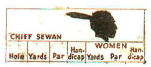
Chief Sewan’s silhouette on the original Seawane score card
The Course
To design the golf course, the founders engaged Devereux Emmet — one of the most distinguished course architects in America, whose portfolio included the Garden City Golf Club, the National Golf Links of America, St. George's, and Congressional. Emmet carved out a true links layout across the meadow and marsh lands bordering Hewlett Bay: 18 holes, 200 bunkers, and almost no trees in sight, much of it built on land reclaimed from the surrounding marshes. Approximately $1,000,000 was spent on fill alone.
The course's Scottish character ran deeper than its landscape. Head Professional David Ramsay — a native of Carnoustie, Scotland, the ancestral home of championship golf — gave each of the 18 holes a name drawn from the great links of Scotland and their heroes: Swilken Burn, Barry Burn, Musselburgh, St. Andrews, Young Tommy Morris, Bobby Jones, Westward Ho! The Carnoustie newspapers, noting that Ramsay was one of the last active Carnoustie professionals still working in the United States, regularly compared the two courses. Seawane's 16th hole was named "Barry Burn" after the famous burn at Carnoustie itself.
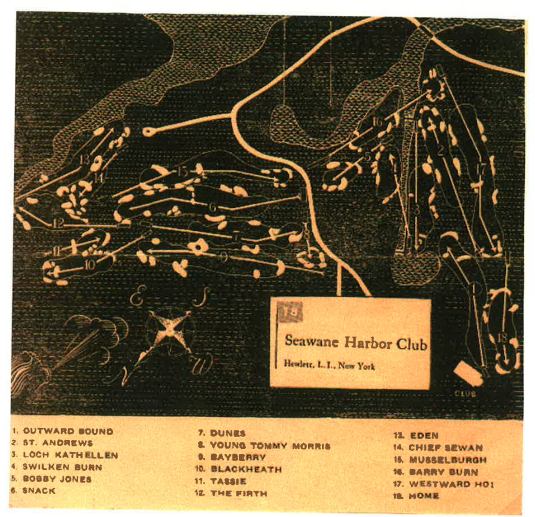
Original Course Map
In the 1960s, following the membership's full buyout of the club, the course was reimagined by Robert Trent Jones, who planted some 350 trees and reworked the bunkering — giving the course a more sheltered, parkland character that defined Seawane for a generation.
By 2000, the pendulum swung back. The club embarked on a major restoration, clearing nearly 1,000 trees and rebuilding all the bunkers to recover the openness of Emmet's original design. The Metropolitan Golf Writers Association recognized the result, naming Seawane its Club of the Year in 2004.
Most recently, the club has engaged golf course architect and shaper Jeff Stein, working closely with superintendent Ryan Bell to deepen the connection between the course and its coastal setting. Drawing inspiration from Emmet's own work at Garden City, St. George's, Congressional, and the National Golf Links, Stein and Bell have woven native sandy fescue landscapes seamlessly from tee to green — reclaiming, nearly a century on, the seaside links character Emmet first imagined here in 1927.
The Clubhouse
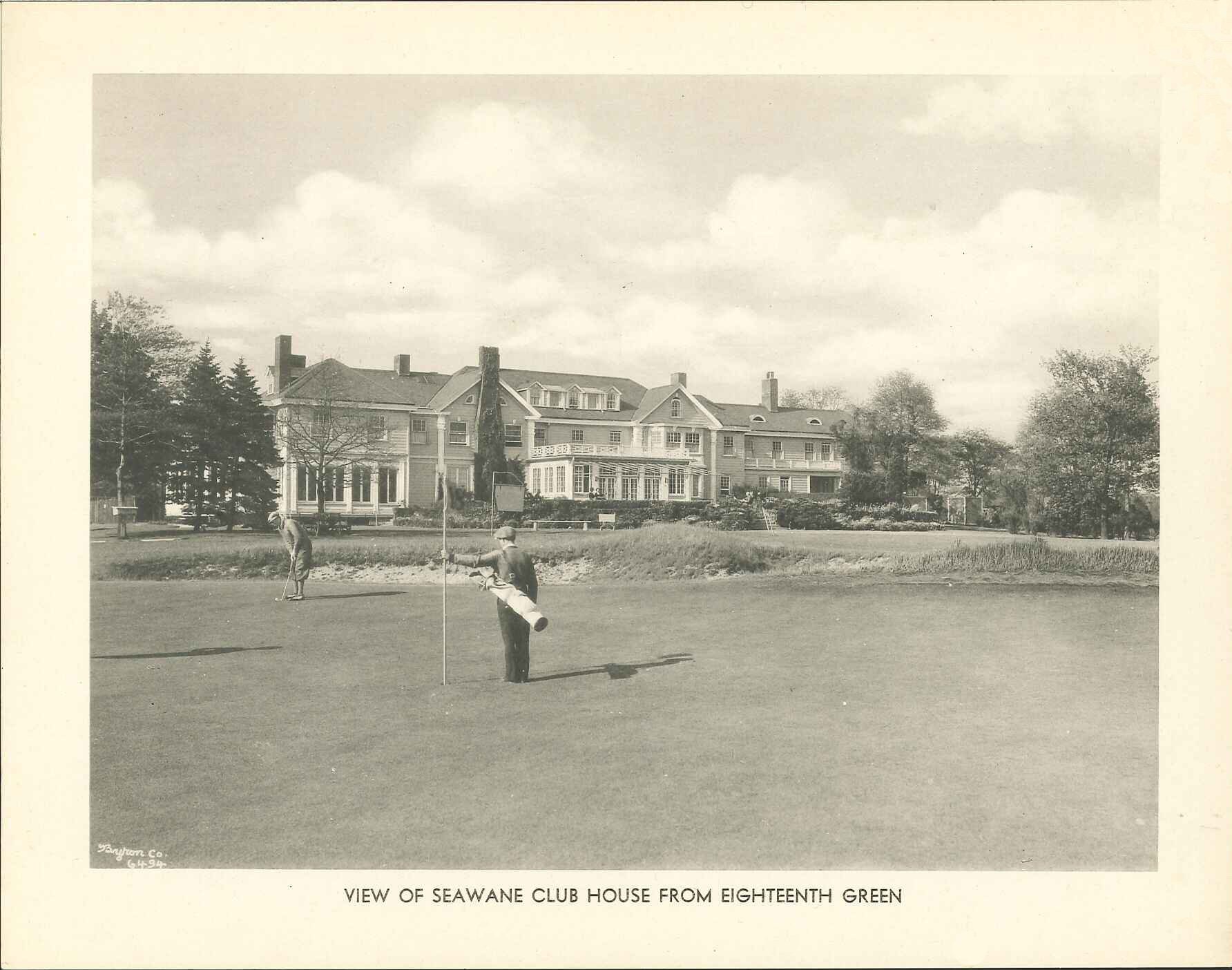
The original Seawane clubhouse was John Auerbach's own three-story Victorian estate — a charming old mansion, in the words of Golf Illustrated, that "retains that homelike atmosphere which new club buildings seem unable to achieve." Its first floor housed attractively furnished lounge rooms; upstairs were twelve bedrooms for member use, six of them large double rooms with bath. The basement bar — nicknamed "the Snake Pit" by members — was a fixture of club social life from the earliest days.
Just across the gardens, fronting on Lake Kathellen, stood the Annex: eighteen double bedrooms and fourteen baths, designed for families who wished to spend a weekend, a week, or an entire summer at the club. A beach casino on Hewlett Bay — 800 feet of fine sandy beach with sun decks, bathhouses, and a lifeguard — completed the picture of a club that was as much a summer resort as a golf destination. Lake Kathellen itself took its name from two of Auerbach's daughters, Kathleen and Ellen, whose names were combined for the body of water that bordered the 3rd and 4th holes. A small cottage at the lake's edge served as additional guest accommodation, and the water hazard it created became one of the course's most memorable features.
In the 1960s, following the membership buyout, the Victorian mansion was replaced with a new structure purpose-built for Seawane's membership. The current clubhouse carries forward the same tradition of warm hospitality that defined the club from its earliest days.
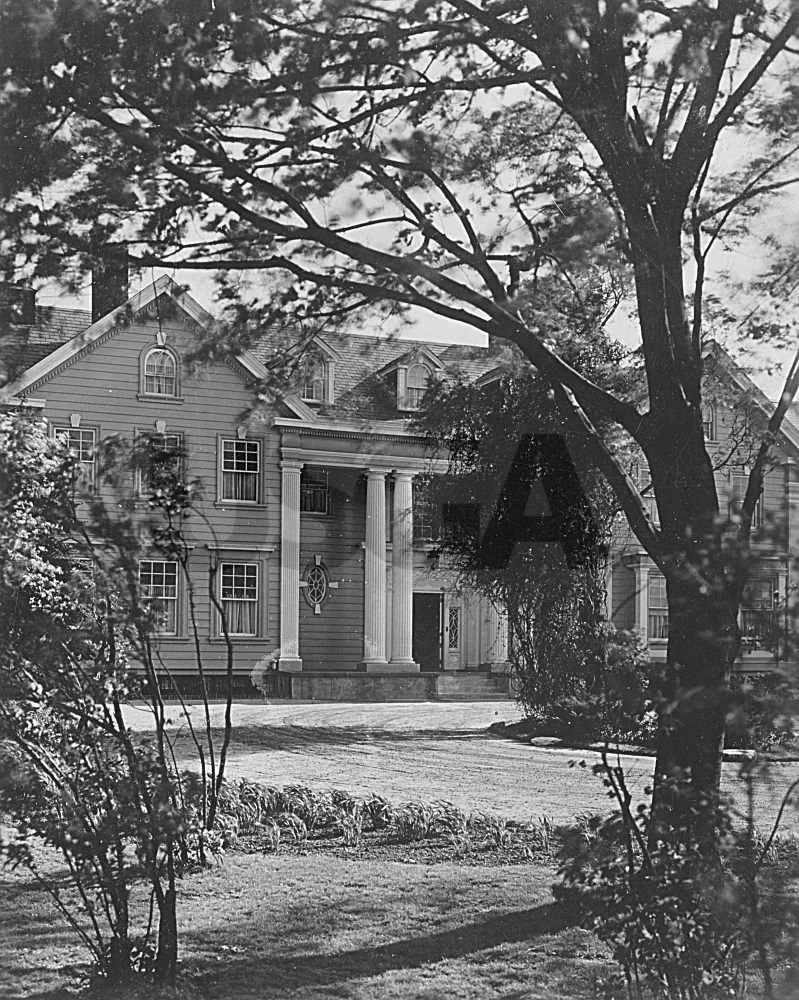
The original clubhouse, USGA Museum
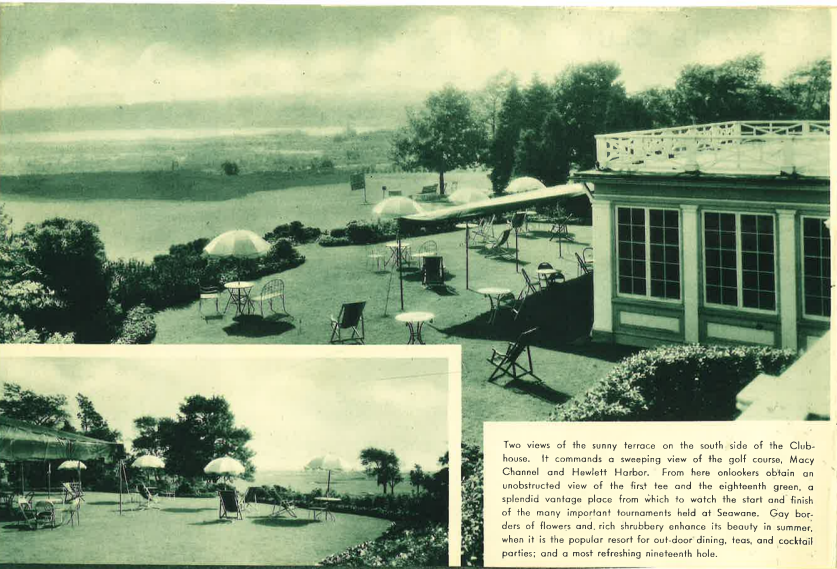
The terrace of the original clubhouse
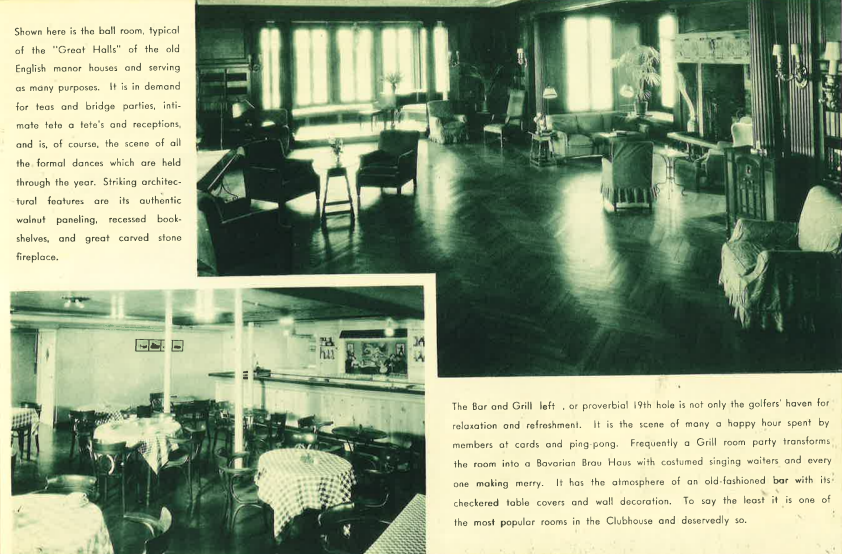
The Great Hall, Bar, and Grill of the original clubhouse
A Century of Championship Golf
From its earliest years, Seawane established itself as one of Long Island's premier venues for competitive golf. The course's combination of open links terrain, prevailing winds off Hewlett Bay, and demanding water hazards made it a natural test for championship play — and the club's membership embraced that identity fully.
In 1936 alone, Seawane hosted the U.S. Open Metropolitan qualifying rounds, the New York State Junior Championship, the Long Island Amateur Championship, and the Long Island Open. The 1936 U.S. Open qualifying field included a 24-year-old Byron Nelson, who tied for second with a 151. The following year, Nelson won the Masters. His competitive biography runs through Hewlett Harbor.
The William D. Richardson Memorial Invitational — named for the longtime New York Times golf writer — became Seawane's signature annual event, hosted continuously for over six decades. In 2008, the Long Island Golf Association honored the club with a special award for hosting the tournament's 60th consecutive edition.
Women's championship golf was part of Seawane's identity from the beginning. Golf Illustrated noted in 1934 that the club was "one of the few Long Island courses on which women are allowed full playing privileges at all times" — a distinction that attracted top players including Helen Hicks, one of the leading women professionals of the era, who called Seawane "one of the best conditioners for tournament competition."
In 2025, the club hosted U.S. Amateur Championship qualifying — drawing 120 golfers from New York, New Jersey, and Connecticut — and the 102nd Long Island Open Championship, presented by Stifel, the first time that prestigious event had been played at Seawane. The championship was won by 18-year-old Eli Weidmann at 11 under par.
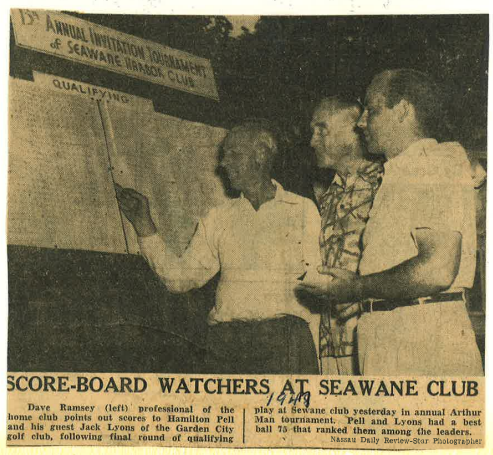
The Arthur Man Tournament, 1947
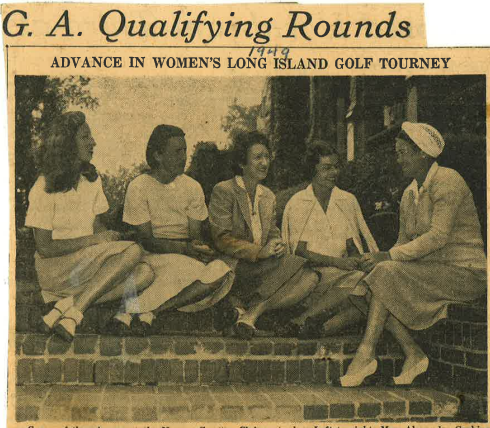
Long Island Women’s Golf Tournament, 1949
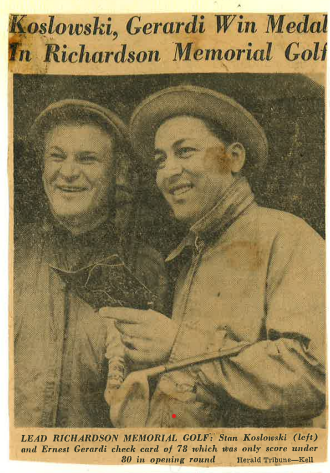
The 1st Richardson Memorial Invitation, 1949
Our Members
Seawane has always been a club whose members did more than play golf. From the earliest years, they shaped it, saved it, and handed it forward.
When World War II placed the original ownership under strain, it was the members themselves who stepped in. Club president Enders Voorhis — a finance executive at U.S. Steel — organized a group of members and community leaders, secured a 30-day option from the aging founder, and assembled enough commitments in the final days to form the Sea Harbor Corporation and purchase the club outright. The deal closed in 1943. In 1960, the membership completed a full buyout of that corporation, converting Seawane into an exclusively private, member-owned institution — a status it held for the next six decades.
The club's social life was as rich as its competitive one. Annual traditions ran deep: the Arthur Mann Memorial Invitation Best-Ball Tournament, named for co-founder Arthur Mann; the Hamilton Pell Cup; the President's Cup; winter dinner dances; summer evenings on the beach. Former New York Governor Alfred E. Smith was among the club's most devoted early patrons, known for his regular foursome and his habit of winning all the money on the eighth hole.
Seawane Today
In 2019, The Seawane Club was recapitalized under private ownership with a singular mission: to provide exceptional experiences to its membership and restore the club to its place as one of Long Island's premier destinations for golf, family life, and community. The pool area was reimagined as a resort-style amenity. A basketball court, pickleball courts, and a children's summer program were added. Seawane became the first club in New York State to offer padel, the fast-growing racket sport now played by members of all ages.
The second century of the Seawane Club is underway, and it looks a great deal like the first one: a community built around a remarkable piece of ground at the water's edge, with a course worth traveling to play and a membership that takes its responsibility to the place seriously.